
Systematically reviewing TE literature
Moving through eras - Timely and convenient

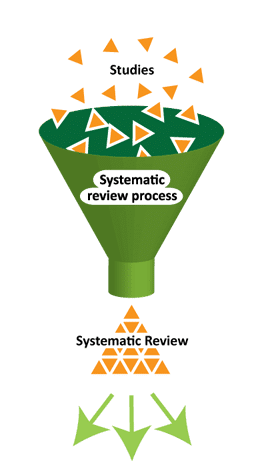
A new paper has triggered my Google scholar alerts set to teacher empowerment (TE) for short.
Celik et al. (2024) provides useful insights into the existing nature of teacher empowerment - and at just the right time also!
Using a bibliomaniac method they separate the psychological literature from the structural. Structural meaning those studies and papers that engage with organisational practices and behavioral processes. Whereas psychological literature emphasises internal and cognitive processes.
According to Celik et al. (2024) teacher empowerment grew out of research exploring human relations in management (such as Kanter, 1977). This may explain why much of the empowerment literature seems rather, well, disempowering.
They note that, “There is often a lot of isolation and survival on their own, resulting in a sense of powerlessness (Sprague, 1992; Welsh & Swain, 2020).” (Celik et al., 2024, p.3), which makes both a psychological, or perhaps personal approach necessary - either capable or inhibited by structural concerns.
Conger & Kanungo (1988) explain empowerment as a means to explain organisational effectiveness, showing a clear outline of a structural approach - in this sense showing how empowerment relies upon others rather than one’s self.
Importantly, “Research has shown that teacher empowerment, when linked to professional development and increased authority, can significantly increase job satisfaction, which in turn encourages teacher retention (Whipp & Geronime, 2017).” (Celik et al., 2024, p.3). So again, not that this is the only reason to pursue this line of research, but it’s always nice to reiterate it.
Thomas & Velthouse (1990) explain empowerment as increased task motivation and note the four elements as crucial, notably, “sense of impact, competence, meaningfulness, and choice.” (p.1). Crucially we can see that the phrase “sense of impact”, does not even require impact itself, but rather a deceitful sense of influence. And these challenging ideas do not gel with those that I value within my own research and framing of teacher empowerment.
Whilst the emergence of a psychological framing of empowerment enters the literature through Dee et al. (2003) who propose the following four antecedents for effective employee (read teacher) functioning, which are:
autonomy (freedom to do the work);
knowledge (tools to do the work);
importance (a sense of personal impact); and
feedback (information about how people are doing). (p.257)
Bowen & Lawler (1992) explored the way to develop an empowering workplace for service workers, as something of a counter to the production line, Taylorist model of management.
As Chion-Kenney (1994) note within their book on ‘Site-based management’ that “Site-based management is putting the decisions at the building level. It is about bringing those closest to the decisions being made into the process of making them.” (Chion-Kenney, 1994, p.7). The phrase site-based management (SBM) is referred to as a synonym for teacher empowerment, noting it as ‘different names, same goals’ (p.9).
Similarly Belasco and Stayer (1994) suggest that the task of leaders is to make employees responsible for their own performance.
These papers suggest that empowerment is something to be granted, given the illusion of, or implied - rather than something psychological, internal or being generated from within a group of employees.
For my own definition of empowerment, I propose a blending of both psychological and structural components with an emphasis on psychological aspects having the potential to overcome the majority of structural elements. Grounded in a critical pedagogy conception, I place a broader sphere of influence than previously conceived locating potential influence within society at large. As Melenzyer (1990) noted, critical education approaches draw the line at community as the upper boundary for influence, ignoring the possibility of societal change, beyond say the flow-on-effect of community engagement upon broader society.
This broader influence is possible in part due to the possibilities and affordances granted by emerging technologies and platforms - though it must be noted that this influence is and was possible before them. It must be noted that not all teachers seek or even require empowerment, and it’s likely that empowerment may only be a minority interest or pursuit. If this is the case, and further research may begin to unearth this, then the conditions and actions of these empowered or empowerment-seeking teachers will remain instructive for those seeking to make teaching a more positive profession. As the conditions and interests of these teachers may be used to apply to those teachers who are not actively seeking empowerment.
So why empower?
Both Short (1992) and Lortie (1975) note the isolated nature of teaching, existing as it does within a single classroom with limited oversight of others. What this means is that teachers have a tendency to fall back upon re-enacting the practices they witnessed as students - further deepening the standard ‘way things are done’.
Empowerment as a concept grew out of a literature where it was not true empowerment being sought, but rather initiative of workers as the goal. For this reason research into the field requires quite a journey to reach something that looks like one teachers work to engage with their own, or others, empowerment .
References
Belasco, J. A., & Stayer, R. C. (1994). Why empowerment doesn't empower: The bankruptcy of current paradigms. Business Horizons, 37(2), 29-42.
Celik, O. T., Sari, T., & Karagozoglu, A. A. (2024). A Systematic Literature Review of Research on Teacher Empowerment. Urban Education, 00420859241301073.
Chion-Kenney, L. (1994), Site-based Management and Decision Making: Problems and Solutions,
American Association of School Administrators, Arlington, VA.
Conger, J. A., & Kanungo, R. N. (1988). The empowerment process: Integrating theory and practice. Academy of management review, 13(3), 471-482.
Kanter, R. M. (1977). Men and women of the corporation. Basic Books.
Melenyzer, B. J. (1990). Teacher Empowerment: The Discourse, Meanings and Social Actions of Teachers.
Short, P. M. (1992). Dimensions of Teacher Empowerment.
Sprague, J. (1992). Critical perspectives on teacher empowerment. Communication Education, 41(2), 181-203.
Thomas, K. W., & Velthouse, B. A. (1990). Cognitive elements of empowerment: An “interpretive” model of intrinsic task motivation. Academy of management review, 15(4), 666-681.
Running Word Count (the second 100,000): 102,056
'Importantly, “Research has shown that teacher empowerment, when linked to professional development and increased authority, can significantly increase job satisfaction, which in turn encourages teacher retention.'
Who would have thought it!!!! Duh.